
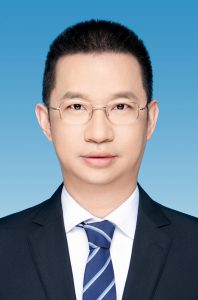
Prof. Huaping Zhang
Vice Dean, School
of Artificial Intelligence, Computer Science and Technology,
Vice Director of Data Intelligence Technology Center
Beijing Institute of Technology, China
Biography: Dr. Kevin (or Hua-Ping) Zhang is Distinguished Professor, Ph.D Supervisor, National Level Leading Talents, Vice Dean, School of Artificial Intelligence, Computer Science and Technology, Vice Director of Data Intelligence Technology Center, Director, NLPIR Lab. ,Beijing Institute of Technology. He was awarded with National Level Leading Talents . He is chief secretary of Board of Intelligence MulitiLingual Information Processing (IMLIP), affiliated with Chinese Association for Artificial Intelligence (CAAI); and Distinguished member of China Computer Federation (CCF). His research interests include Big Data search and mining, natural language process especially with Chinese language processing. He is guest professor in Xinjiang Univeristy, Southwest University of Political Science & Law, Capital Normal University and Liaoning Normal University. Dr. Zhang is a reviewer of several journals, such as ACL、COLING、EMNLP、IEEE Transactions on Neural Networks and Learning Systems(top journal)、Knowledge-Based Systems (top journal), Computer Research and Development, China Online Scientific Paper.As the team leader, he has been granted over 30 research projects by National Science Foundation of China, China Fundamental Research Plan, and Defense Technology Foundation. Dr. Zhang has published 5 books, over 100 papers. He developed Chinese lexical analysis system NLPIR/ICTCLAS, which was the most cited work in Chinese natural language processing domain (over 20,000 citations). He was awarded with the first prize of Qian Wei-Chang Chinese Information Science and Technology Award (top award in Chinese NLP field) in 2010, the Second Prize of Science and Technology Award from Xinjiang Government for Progress in Science and Technology in 2016, First Prize of Science and Technology Award from Xinjiang Government for Progress in Science and Technology in 2021 (the 2nd position), and the Second Prize of National Defense Science and Technology Award in 2022.

Prof. Harald Löwe
Technical University of Braunschweig, Germany
Biography:
Harald Löwe received the Diploma (Hons.) degree in
mathematics in 1990 and the Dr. rer. nat. degree (summa cum
laude) in 1994, both from Technical University of
Braunschweig, Braunschweig, Germany, and the Habilitation
degree in 2001. He is a Professor with the Department of
Mathematics, Technical University of Braunschweig. He was a
Visiting Professor with University of La Laguna, Santa Cruz
de Tenerife, Spain, and University Henri Poincaré, Nancy,
France. He joined Beijing Union University, Beijing
University of Technology, and Henan Polytechnic University
(Jiaozuo, China), as a Guest Professor.
His research interests include geometry, especially
geometric methods in mechanics, robotics, design and
manufacture of spiral bevel gears, and metal injection
molding. Furthermore, he is concerned with high school
projects in mathematics and with the improvement of math
teaching for engineers. Recently, he is studying senseful
usages of AI-tools, especially GPTs and other Large Language
Models, within lectures on robotics and applied mathematics.
Dr. Löwe is the Chief Editor of Mathematikinformation. He
received the Heinrich-Büssing Prize for outstanding research
in 2002.
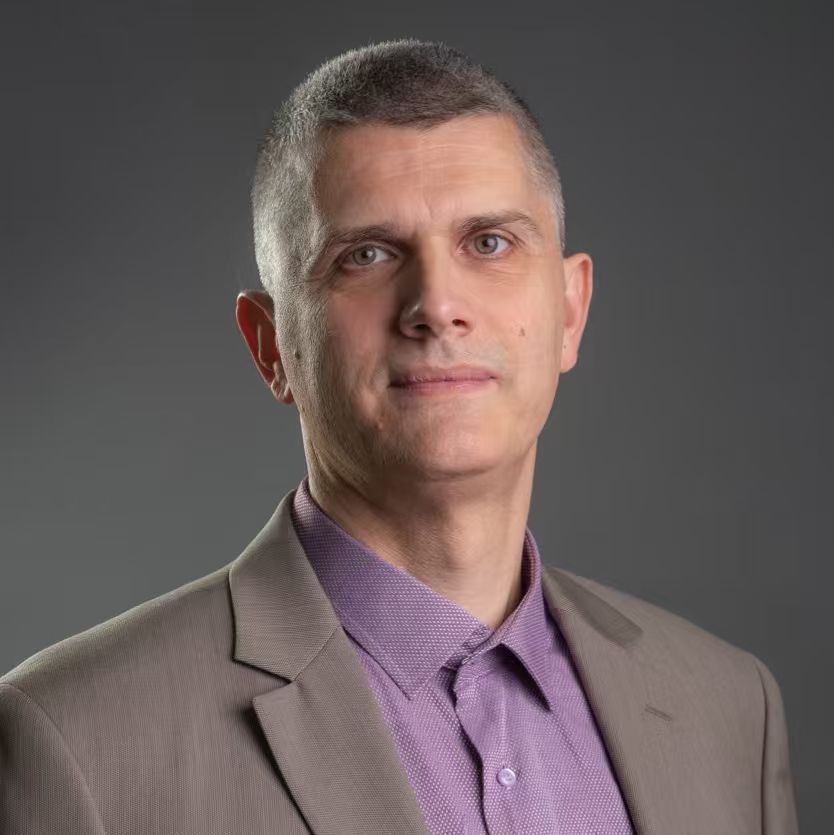
Prof. Tomo Popović
University of Donja Gorica, Montenegro
Biography:
Prof. Dr. Tomo Popović is an Associate Professor and holds a
Ph.D. in Technical Sciences from the Faculty of Electrical
Engineering, University of Montenegro. He received his
Master of Engineering degree in Electrical and Computer
Engineering from Texas A&M University, USA, and his
Bachelor’s degree in Electrical Engineering from the Faculty
of Technical Sciences, University of Novi Sad, Serbia.
Prof. Popović is actively involved in teaching computer
science and information systems. He has 25 years of
international experience in both industrial and academic
environments in Serbia, the United States, and Montenegro.
His recent projects include the development of software and
Internet of Things (IoT) platform architectures for
precision agriculture and eco-monitoring (BIO-ICT, HERIC);
an IoT- and mobile application-based solution for brand
protection and counterfeit prevention in the wine industry
(TagItWine, H2020); and the Digital Transformation of
Agriculture and the Food Supply Chain (DIPOL, national
project). These projects subsequently led to the approval of
several new initiatives, including H2020 DEMETER, Erasmus+
VIRAL, IPA ECOMON, and the Food-HUB Centre of Excellence.
His more recent projects include H2020 EuroCC and H2020
AIMHiGH under the FF4EuroHPC initiative.
His research focuses on applied computer science,
particularly intelligent systems, the Internet of Things,
and data science, with applications in energy, biomedicine,
agriculture, and industrial systems. Prof. Popović has
authored and co-authored more than 100 papers published in
scientific journals and conference proceedings.
He is a Senior Member of IEEE and a member of ACM and CIGRE.
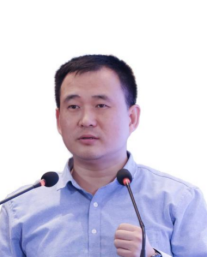
Prof. Daxin Tian
Beihang University, China
Biography:
Tian Daxin,Changjiang
Distinguished Professor, IEEE Fellow, Deputy Director of the
Institute of Science and Technology and Director of the
Frontier Innovation Office at Beihang University. He is a
recipient of the XPLORER PRIZE, the National Science Fund
for Excellent Young Scholars, the Young Changjiang Scholar
award, the Newton Advanced Fellowship, and the CAFOE
Outstanding Young Scholar award conferred by the Chinese
Academy of Engineering.
He serves as Chair of the Unmanned Systems Committee of the
Chinese Institute of Command and Control (CICC), Vice Chair
of the Intelligent Transportation Information Engineering
Branch of the Chinese Institute of Electronics (CIE), Vice
Chair of the CCF Intelligent Vehicles (CCF IV) , and
Director of the Beijing Key Laboratory of Vehicle-Road
Coordination and Safety Control.
His research focuses on artificial intelligence, autonomous
driving, and multimodal fusion perception. He has
innovatively proposed a multi-scale visual feature
self-attention fusion method, an image-point-cloud semantic
enhancement and point-wise fusion module, and a
multi-vehicle data collaboration and spatio-temporal
attention fusion framework. He has published more than 100
academic papers in top-tier journals in artificial
intelligence and intelligent transportation, including IEEE
Transactions on Neural Networks and Learning Systems (IEEE
TNNLS) and IEEE Transactions on Intelligent Transportation
Systems (IEEE TITS) . He has authored 7 monographs, 2
textbooks, and 2 translated books, and has been granted 51
invention patents. He has led 12 national projects,
including a key special project under the National Key R&D
Program of China's “open competition” (jiebang guashuai)
mechanism and a key project funded by the National Natural
Science Foundation of China. He has received 15 science and
technology awards, including the Second Prize of the
National Scientific and Technological Progress Award, and 5
teaching awards, including the First Prize of the National
Teaching Achievement Award.
Invited Speaker
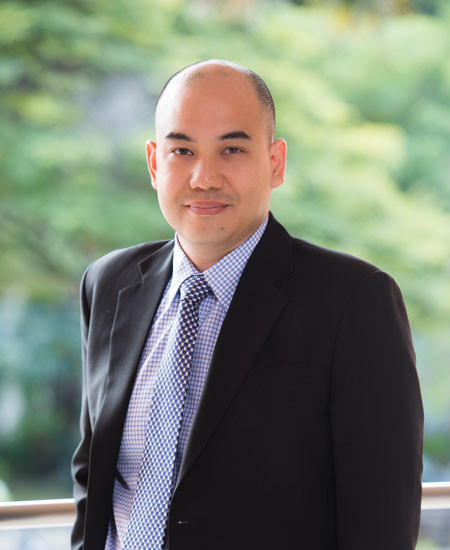
Prof. Thepparat Phimolsathien
King Mongkut Institute of Technology Ladkrabang, Thailand
Biography:
Associate Professor Dr. Thepparat Phimolsathien is a
distinguished academic and legal expert currently serving on
the faculty of the King Mongkut Institute of Technology
Ladkrabang Business School (KBS). With a robust
multidisciplinary background spanning international trade
law, economics, and digital technology governance, Dr.
Phimolsathien has built a dynamic career that bridges higher
education and high-level public service in Thailand.
Dr. Phimolsathien’s academic journey began in the United
States, earning a Bachelor of Arts in Economics from the
University of California, Santa Barbara, in 1996. Pursuing a
deep interest in the legal frameworks of global commerce,
Dr. Phimolsathien subsequently relocated to the United
Kingdom to attend the University of Newcastle upon Tyne,
earning a Master of Laws (LLM) in International Trade Law in
2001, followed by a PhD in the same field in 2011.
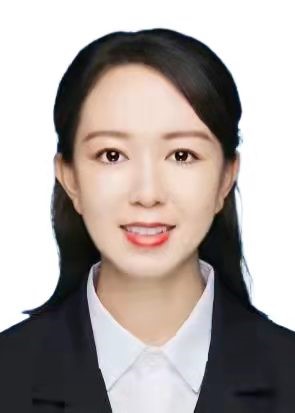
Dr. Xiaoyu Li
Inner Mongolia University, China
Biography: Xiaoyu Li, born in March 1991, received her Ph.D. in Information and Communication Engineering and currently holds the position of Lecturer at the School of Electronic Information Engineering, Inner Mongolia University. Her research focuses on visual perception for mine safety situational awareness, AI-based video and image analysis, and industrial Internet of Things. In recent years, she has presided over one National Natural Science Foundation of China (NSFC) project, one Natural Science Foundation of Inner Mongolia Autonomous Region (Youth Program), two Key R&D and Achievement Transformation Program projects of Inner Mongolia Autonomous Region, and one autonomous region-level talent project; she has also served as a key participant in one National Key R&D Program of China, two NSFC projects, and two provincial/ministerial-level research projects. To date, she has published over 20 academic papers, including 12 indexed by SCI/EI, filed 8 national invention patent applications (3 granted), and been granted 2 utility model patents. She served as Program Chair for the 8th IEEE International Conference on SPML and the 7th International Conference on AITC. She is currently a Youth Editorial Board Member of Advanced Information and Communication, and serves as a reviewer for several SCI-indexed journals, including Signal, Image and Video Processing, Scientific Reports, Multimedia Systems, and International Journal of Machine Learning and Cybernetics.
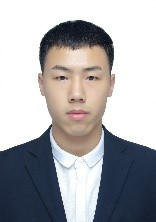
Dr. Guo Bochao
Beijing Polytechnic University, China
Biography: Dr. Bochao Guo received his Ph.D. degree in Information and Communication Engineering from China University of Mining and Technology (Beijing). He is currently a Lecturer at the School of Aeronautical Engineering, Beijing Polytechnic University. With over 10 published academic papers, including 8 indexed by SCI/EI, he has established an active research record. His current research interests focus on wireless power transfer and electromagnetic thermal safety, with an emphasis on their practical engineering applications.